Oral cancer is a serious disease that affects thousands of people each year. While it represents a minority of all cancer diagnoses — roughly 2.9% in the United States — the impact is significant: national estimates place new cases in the tens of thousands annually, with several thousand deaths each year. Because outcomes improve markedly when the disease is detected early, routine screening has become a routine and important component of preventive dental care.
Screening is not a single test but a careful clinical habit. During routine examinations, dental professionals look for early, subtle changes that might otherwise go unnoticed by patients. Catching suspicious signs sooner increases the likelihood of successful treatment and can reduce the need for more extensive procedures later on. Screening is straightforward, noninvasive, and can be lifesaving.
Over the last decade, patterns in oral and oropharyngeal cancer have shifted, especially with the growing role of human papillomavirus (HPV) in oropharyngeal cases. Because risk factors and disease presentation vary, a personalized screening approach — tailored to a patient’s history and lifestyle — helps clinicians identify those who need closer monitoring or further diagnostic testing.
Oral cancers can arise in several places inside the mouth and throat. Common locations include the tongue (particularly the sides and base), the tonsils and oropharynx, the gums, the floor of the mouth, the inner lining of the cheeks, the hard palate, and the lips. Each site can show different early signs, so a systematic, head-to-toe inspection of the oral and neck areas is important during every exam.
Certain factors increase a person’s likelihood of developing oral cancer. Long-term tobacco use and heavy alcohol consumption remain two of the strongest contributors. Historically, men over age 50 have been at higher risk, although changing patterns of sexually transmitted HPV infection have shifted some of that demographic. Other contributors may include excessive sun exposure to the lips, prior radiation to the head and neck, poor nutrition, chronic reflux, and exposure to specific workplace chemicals.
Risk is cumulative and often interdependent: for example, tobacco and alcohol together raise risk more than either factor alone. Because many people have one or more risk factors, screening is recommended as part of routine dental care for adults, with the frequency and intensity of follow-up adjusted based on individual risk profiles.
An oral cancer screening is a focused, methodical evaluation that starts with a review of your medical and dental history. Your clinician will ask about symptoms, recent changes in health, tobacco and alcohol use, and any other concerns that might influence risk. These questions help guide a personalized examination and determine whether additional testing is needed.
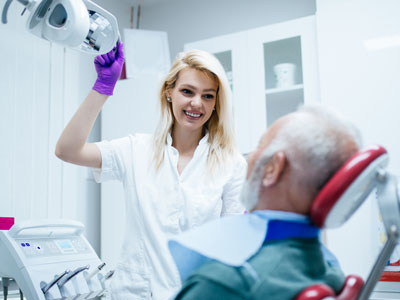
The clinical exam itself involves a visual inspection and careful palpation. The dentist will look for color changes, patches, sores, lumps, or ulcers inside the mouth and along the lips. They will gently feel the tissues of the mouth and the lymph nodes in the neck for any firm or enlarged areas that could indicate an underlying problem. This hands-on approach is quick, painless, and highly informative when performed regularly.
In some cases, adjunctive tools may be used to aid detection. Noninvasive options such as tissue fluorescence or vital-staining agents can highlight suspicious areas that merit closer attention. These tools do not replace clinical judgment or biopsy when indicated, but they can provide additional information to guide monitoring and referral decisions.
Early oral cancer often produces subtle or easily overlooked changes. Common warning signs include a sore or ulcer that does not heal within two weeks, white or red patches on the mucosa, a persistent lump or thickening, unexplained numbness, or a bleeding area that recurs without an obvious cause. Changes in speech, swallowing difficulties, or persistent hoarseness can also indicate oropharyngeal involvement.
Because many benign conditions can look similar to early cancer, the key is persistence and documentation. Any lesion or symptom that lasts longer than two weeks should be evaluated and rechecked. Your dental team may photograph the area, note its dimensions, and arrange short-term follow-up to determine whether the change resolves or requires further testing.
If the clinician identifies an area of concern, the usual next step is referral for diagnostic testing, which may include a biopsy performed by a specialist. Timely evaluation and a clear plan of action are central to improving outcomes; being prompt about reporting persistent oral changes helps clinicians intervene earlier when necessary.
Many risk-reduction strategies are practical and within a patient’s control. Avoiding tobacco in all forms and limiting alcohol intake are two of the most effective measures. Protecting the lips from excessive sun exposure, maintaining a balanced diet rich in fruits and vegetables, and managing chronic conditions like reflux can also reduce risk over time. Additionally, vaccination against HPV is a preventive measure with demonstrated benefits for reducing HPV-related cancers when given according to public-health guidelines.
Routine dental visits provide the best opportunity for consistent screening and early intervention. If a suspicious finding is discovered, the standard course is close observation, documentation, and referral for biopsy when appropriate. Patients who receive a confirmed diagnosis will be connected with an appropriate multidisciplinary team for staging and treatment planning; dental professionals play an ongoing role in supporting oral health before, during, and after cancer treatment.
Our practice encourages an open dialogue about risk factors and prevention during regular visits. For patients with higher-risk profiles, clinicians may recommend more frequent checks or collaborate with medical colleagues to ensure coordinated care. Maintaining scheduled exams helps protect long-term oral and overall health.
In summary, oral cancer screening is a simple, routine step that can make a profound difference in outcomes. By combining a careful clinical exam, attention to symptoms, and risk-reduction strategies, dental professionals help detect problems early and guide patients to timely care. If you have questions about screening, prevention, or your personal risk, please contact the office of Dental Excellence of Brandon for more information and guidance.