Tooth loss affects daily life in ways both obvious and subtle: it can change how you eat, alter speech patterns, and gradually change facial support. Contemporary implant dentistry focuses on restoring those functions and features with solutions designed to integrate with the body and behave like natural teeth. These restorations are built on titanium or ceramic posts that bond with the jawbone, providing a foundation for crowns, bridges, or full-arch restorations that look and act like real teeth.
Every patient’s needs are different, and the path to a restored smile starts with careful evaluation. Clinical imaging, a review of medical and dental history, and an assessment of jawbone volume and gum health help determine which implant solution is appropriate. Throughout the process, we emphasize predictable outcomes, aiming to preserve bone and soft tissue while delivering a restoration that is comfortable and long-lasting.
At Dental Excellence of Brandon we take a team-based, patient-centered approach. We combine modern diagnostic tools with thoughtful treatment planning so that you understand every step—from preparation through long-term maintenance—without unnecessary technical jargon. The goal is simple: return reliable function and a natural appearance so you can speak, eat, and smile with confidence again.
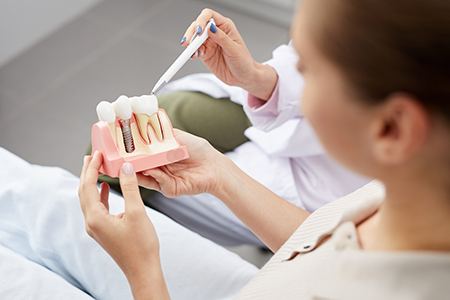
Unlike removable prosthetics that rest on the gums, dental implants replace the tooth root as well as the visible portion of the tooth. When an implant fuses with the surrounding bone, it restores the mechanical forces of chewing to the jaw. That bone stimulation preserves the contour of the jaw and helps prevent the resorption that leads to a sunken or aged appearance over time.
This root-level integration is a major reason implants are favored for long-term oral health. They support restorations without relying on neighboring teeth for stability, which means healthy adjacent teeth can often be left unaltered. From a functional standpoint, implant-supported restorations deliver secure chewing performance and improved tactile feedback compared with most removable alternatives.
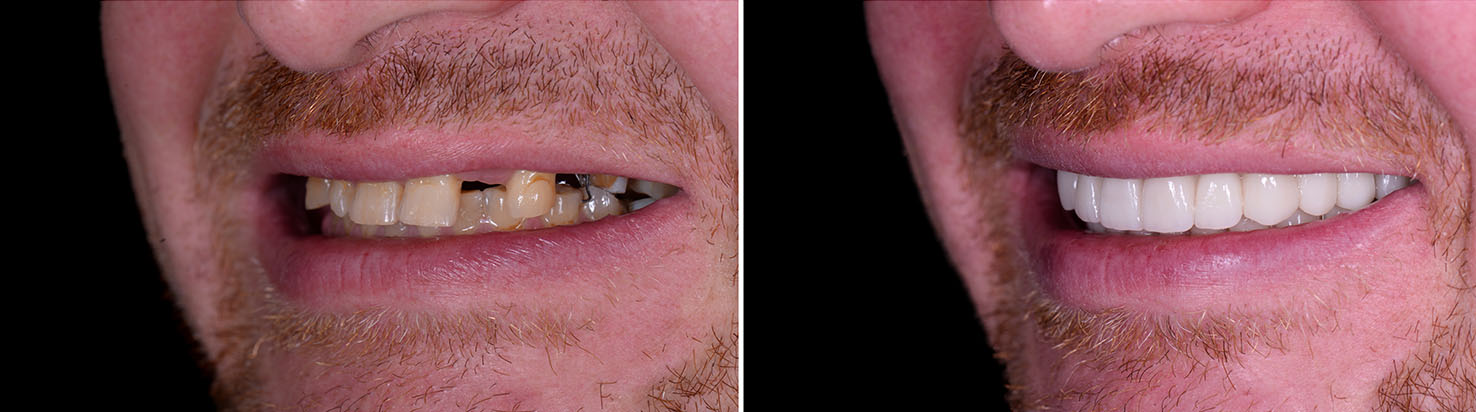
When combined with carefully designed crowns or bridges, implants create a seamless visual result. Modern ceramic materials and digital design tools allow restorations to blend with the surrounding teeth in color, shape, and translucency—delivering a result that is both durable and natural-looking.
Implant restorations are tailored to each patient’s anatomy and goals. For single missing teeth, a crown attached to a single implant is an elegant solution that avoids altering neighboring teeth. For multiple missing teeth, implants can support bridges that span gaps without the need to grind down otherwise healthy teeth, preserving long-term dental integrity.
For patients who have lost most or all of their teeth, implant-supported full-arch restorations can be designed as fixed (non-removable) prostheses or as removable overdentures that snap into place on precision attachments. Both approaches significantly improve chewing efficiency and reduce the movement and discomfort commonly associated with conventional dentures.
Patient comfort and communication are priorities throughout treatment. We’ll explain anesthesia and sedation options, walk through the surgical and restorative timeline, and provide clear expectations for healing and follow-up. Clear communication helps reduce anxiety and ensures that recovery and final results meet your functional and aesthetic goals.
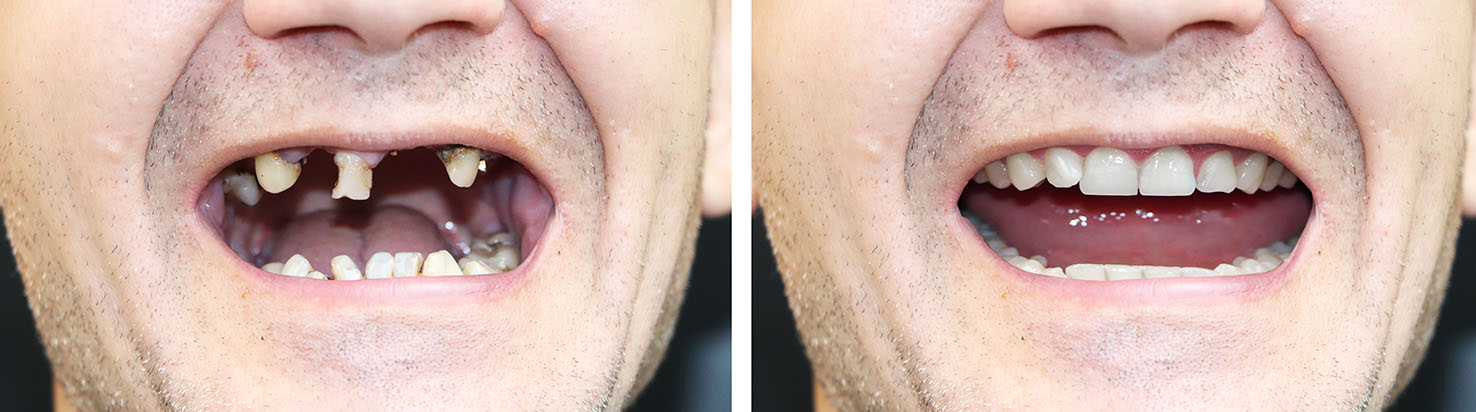
Dental implants are valued for their longevity, stability, and their ability to preserve oral structures. When properly placed and maintained, implants can remain functional for many years. Because they restore support to the jawbone, implants help maintain facial proportions and reduce the risk of bone loss that accompanies tooth absence.
Another advantage is the predictability they offer: precise planning and three-dimensional imaging allow clinicians to position implants in optimal locations for both function and esthetics. The result is a restoration that minimizes the risk of slippage, improves speech clarity, and allows a broader range of foods to be enjoyed safely.
Finally, implants simplify hygiene compared with certain alternative prostheses. Implant-supported crowns and bridges behave like natural teeth in daily care routines, and routine dental visits focus on monitoring tissue health and mechanical stability rather than frequent adjustments or relines.
Implant dentistry is not one-size-fits-all. Treatment is selected based on the number of missing teeth, bone availability, esthetic demands, and patient preferences about removable versus fixed solutions. Careful preoperative planning helps match the prosthetic design to the daily needs and expectations of each patient.
Today’s options range from single-tooth replacements to complex full-arch solutions. Many patients appreciate the flexibility of choosing restorations that balance cost, invasiveness, and long-term function while preserving maximum healthy tissue. Advanced imaging and digital workflows make it easier to visualize outcomes and plan precisely where implants will be placed.
Below are common restorative strategies and how they differ in purpose and design.
A reliable implant begins with a healthy foundation. Adequate jawbone volume and stable gum tissues create the environment needed for long-term success. When bone has resorbed after tooth loss or disease, grafting procedures can rebuild the ridge so implants can be placed in the correct position and angulation.
Bone grafts use a variety of safe materials to encourage new bone growth, and many procedures integrate seamlessly into the overall treatment timeline. For some patients, grafting is performed at the time of extraction; for others, staged grafting precedes implant placement to ensure a stable result. The aim is predictable support for the implant and an attractive soft-tissue profile for the final restoration.
Maintaining healthy gums is equally important. Periodontal health is assessed and managed before any implant work begins so that the surrounding tissues offer long-term protection around the implant-abutment interface. When necessary, soft-tissue grafts and contouring procedures can enhance esthetics and create a more natural emergence profile for crowns.
Most adults who are in generally good health and have adequate bone can be candidates for implants, but the final determination depends on a comprehensive exam. Factors such as smoking, uncontrolled systemic conditions, or certain medications may affect candidacy and are carefully considered during planning. Even when challenges exist, modern techniques often provide pathways to successful implant therapy.
We approach each case individually, balancing clinical findings with your lifestyle and priorities. Dental imaging and digital planning tools let you see likely outcomes in advance, and we’ll review all treatment options so you can make an informed decision that aligns with your goals.
Because implant care is restorative and preventive at once—replacing missing teeth while preserving underlying bone—many patients find it offers the most reliable route to long-lasting oral health and function.
Treatment timelines vary by case. Some patients receive implants and a temporary prosthesis on the same day, while others undergo staged procedures that allow for healing and osseointegration before the final restorations are placed. The sequencing depends on bone quality, the number of implants, the complexity of the prosthetic design, and whether grafting was required.
Surgical placement is typically performed on an outpatient basis with local anesthesia and, when appropriate, sedation options for comfort. After placement, a period of several weeks to a few months is usually necessary for the implant to fuse with the bone. During this time, we monitor healing and provide care instructions to support predictable integration.
Long-term success relies on routine dental care and proper home hygiene. Periodic professional evaluations check the health of the implant, surrounding tissues, and the integrity of the restoration. With attentive care and regular dental visits, implants can serve as a stable, functional part of your smile for many years.
Dental implant therapy restores more than teeth; it restores confidence, function, and facial support. If you are evaluating options for replacing missing teeth, we can help you understand the clinical considerations and find a path that fits your needs. To learn more or schedule a consultation, please contact Dental Excellence of Brandon for a personalized assessment and clear treatment plan.
If you've lost a tooth due to injury, decay, gum disease, or any other reason, we recommend dental implants to replace missing teeth. Dental implants come the closest to replicating the look, feel, and function of your natural teeth.
Dental implants are placed into the jawbone and mirror the same function as the root of a tooth. The procedure for dental implants is usually performed while a patient is sedated. Patients who undergo IV sedation must have an empty stomach and transportation home following the procedure. Most sedation patients will have little to no memory of the procedure occurring.
Generally, dental implants are made out of a biocompatible metal such as titanium. Biocompatible metals are also used for other common bone implants (such as shoulder, hip, and knee replacements). The visible portion of the implant is usually made out of porcelain and is custom-made to match your existing teeth.
Dental implants are designed to fuse to the bone, which makes them become permanent fixtures. Typically speaking, the success rate is nearly 100%. There are few cases in which the implant will not fuse as intended and must be removed. If this happens to occur, the procedure can be attempted again a few months later.
Dental implants are not usually covered by dental insurance, but may be covered under a patient's medical insurance. Our office and your insurance company can discuss coverage options with you based on your individual case and treatment plan.
It's easy... just take care of an implant as if it's a natural tooth! This involves regular brushing, flossing, and dental checkups. If you have any concerns about your implant, contact us immediately.